Skip to content
National Bird of Sri Lanka: Everything You Need to Know
The national bird of Sri Lanka is the Sri Lankan Junglefowl
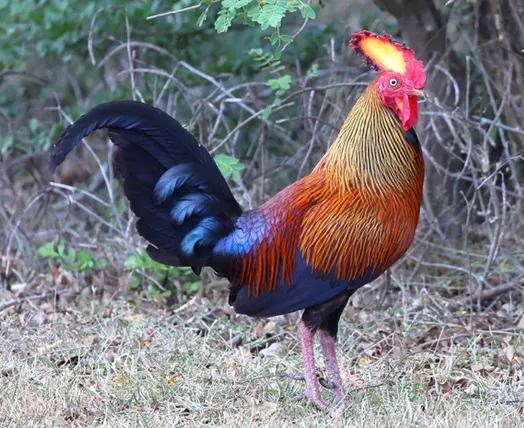
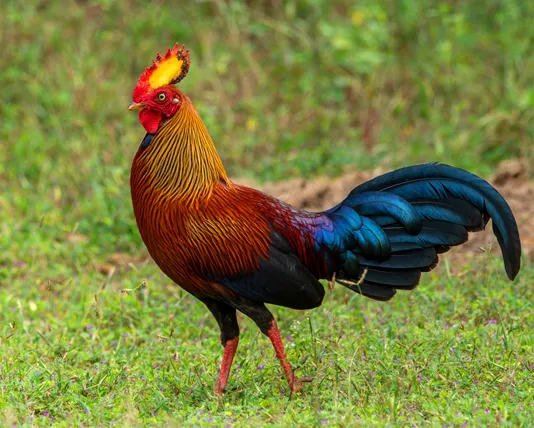
The Sri Lankan Junglefowl (Gallus lafayettii) is the official national bird in Sri Lanka. Deeply rooted in the island’s heritage and ecosystem, this bird was designated as the national symbol due to its striking appearance and the fact that it is found nowhere else on Earth. Known as the Wali Kukula (Sinhala: වළිකුකුලා) in Sinhala and இலங்கை காட்டுக்கோழி (Ilangai Kaattukkoli) in Tamil, it is a crown jewel of the country’s avian diversity.
Why is it Sri Lanka’s National Bird?
The choice of the Junglefowl as Sri Lanka’s national bird is a tribute to the island’s high level of endemism. While the country has many beautiful birds, the Junglefowl stands out for its resilience and its distinct presence across almost all of the island’s diverse landscapes—from the humid rainforests of the wet zone to the arid scrublands of the north.
Physical Description & Identification
The Sri Lankan Junglefowl is a member of the Phasianidae family. While it shares some DNA with the common domestic chicken, it is a wild, flight-capable bird with unique markings.
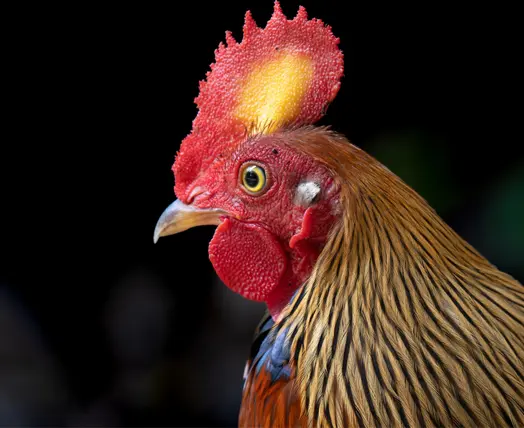
- The Male: The rooster is a spectacle of color. It features a rich orange-red body, a golden-yellow “hackle” (neck feathers), and deep purple-black wings and tail that shimmer in the sunlight. Its most identifying feature is the bright red comb which, unlike the domestic rooster, has a distinct yellow spot in the center.
- The Female: The hen is significantly more understated. Her feathers are earthy brown with black and white mottling. This evolutionary trait allows her to remain nearly invisible to predators like leopards and eagles while she tends to her eggs on the forest floor.
Habitat: Where to Find the National Bird in Sri Lanka
If you are looking to spot this bird in its natural habitat, you are in luck. It is widely distributed across the island. The best places for sightings include:
- Sinharaja Forest Reserve: Ideal for seeing them in a dense rainforest environment.
- Yala & Wilpattu National Parks: Here, they are often seen crossing the jeep tracks in the early morning.
- Horton Plains National Park: The high-altitude grasslands provide a different backdrop for these colorful birds.
- Kitulgala: Famous for birdwatching, where the Junglefowl can be heard calling from the thickets.
Behavior and Ecology
Diet and Foraging
The Sri Lankan Junglefowl is an omnivore and a “generalist” feeder. It spends the majority of its day scratching the soil and leaf litter. Its diet includes:
- Insects: Crickets, beetles, and termites.
- Plant Matter: Seeds, fallen berries, and succulent leaves.
- Specialty: They are known to congregate in areas where the Strobilanthes (Nelu) flower blooms, as they love the seeds of this plant.
Breeding and Nesting
The breeding season usually peaks from February to May, though they can breed throughout the year. Interestingly, the female creates a simple “scrape” on the ground or uses a low tree stump to lay her eggs. A typical clutch consists of 2 to 4 eggs, which are creamy white with reddish-brown speckles.
Conservation Status
Currently, the Sri Lankan Junglefowl is listed as “Least Concern” by the IUCN. However, like many endemic species, it faces threats from habitat loss due to deforestation and occasional hybridization with domestic chickens in village areas. Protecting the forest corridors is vital to ensuring that this vibrant symbol of Sri Lanka continues to thrive.